Submissions October 2025
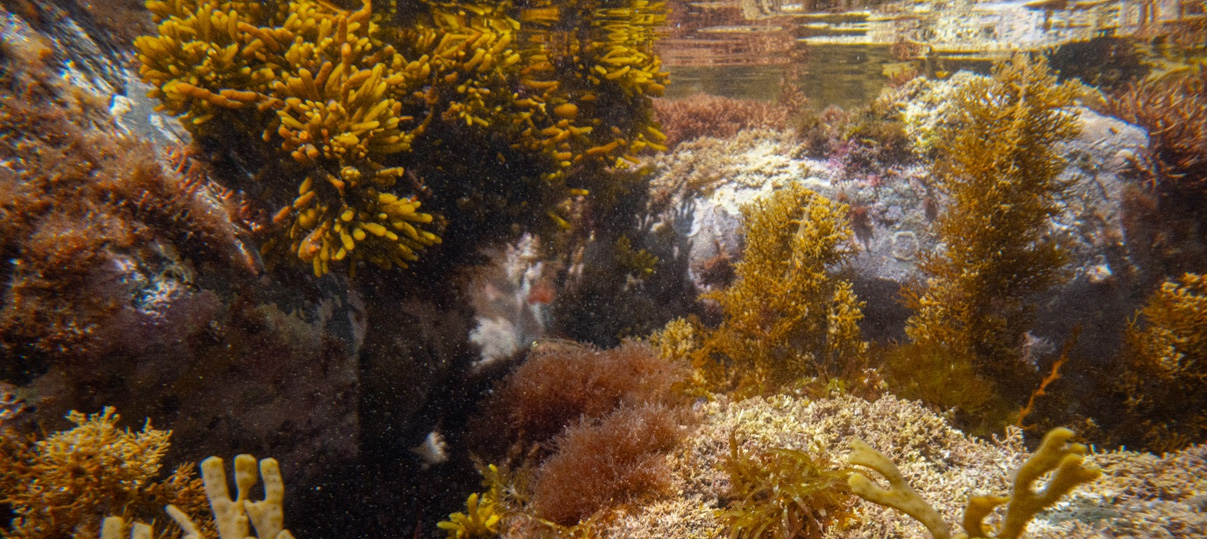
Mostly just stuff I am doing to help the planet
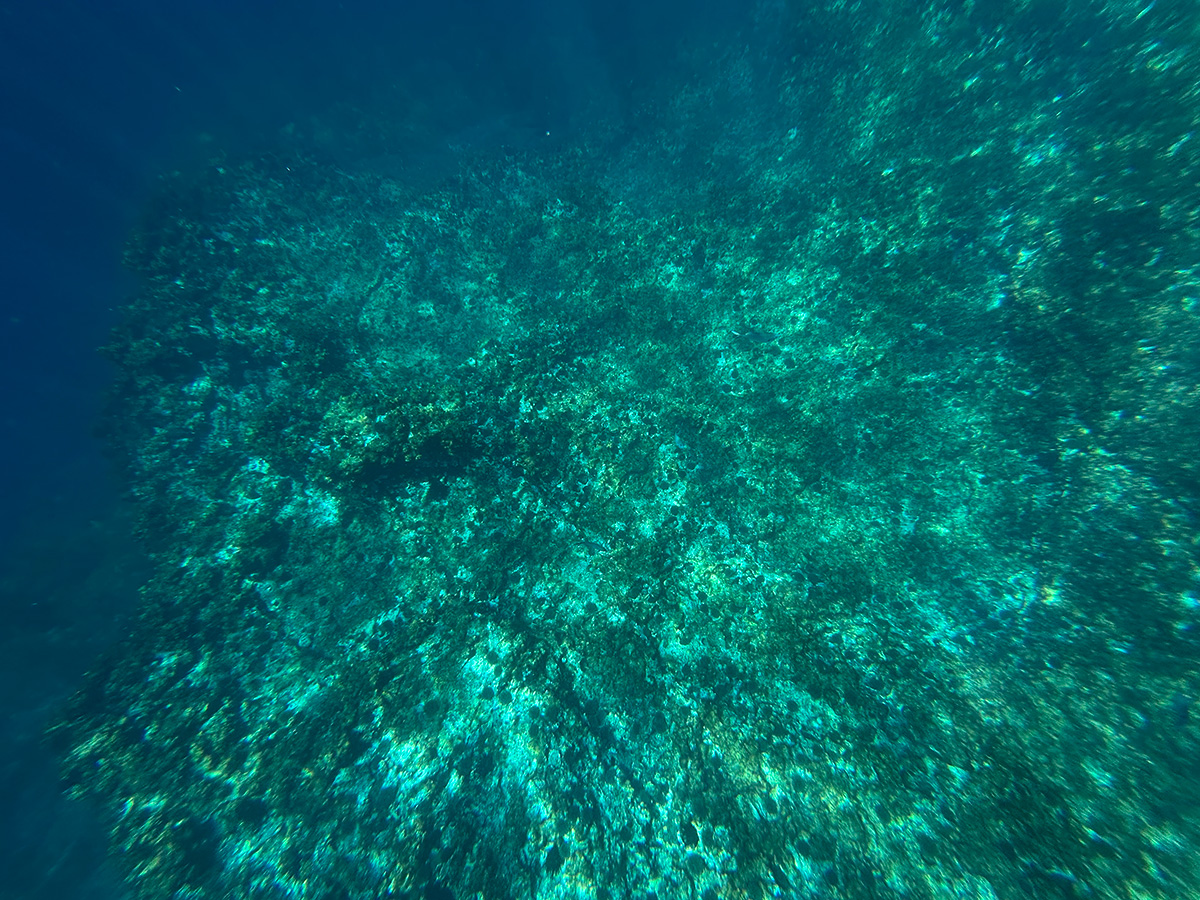
Fisheries New Zealand are still stuck in a single-species mindset, managing kōura / spiny lobster as if they exist in isolation. The real measure of success should be the recovery of kelp forest coverage – the foundation of our shallow reef ecosystems. To their credit, FNZ are finally discussing area closures, but the framing remains too narrow.
My estimates (based on the best available information) show that restored kelp forests in CRA 2 (Hauraki Gulf Marine Park) could be worth 12–29 times more than the entire fishery. In CRA 1 (Northland), the foregone ecosystem services from lost kelp forests are even starker – between 100 and 228 times greater than the value of the fishery itself.
The packhorse lobster fishery in northeastern New Zealand should be closed immediately to allow predator populations to recover, avoiding millions of dollars in ongoing costs for culling long-spined sea urchins.
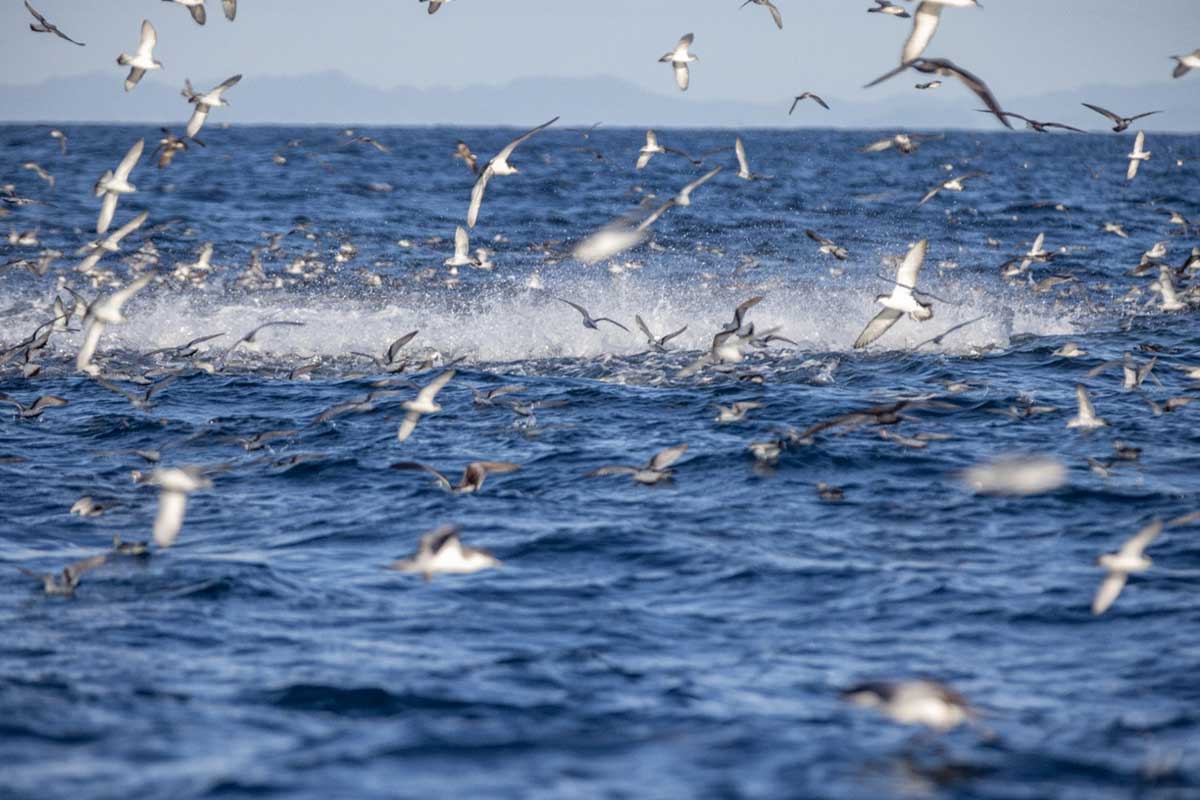
The government’s plan to revitalise the Gulf includes creating new marine protected areas and phasing out bottom trawling in some zones. These are welcome moves, but they will take time—and they don’t go far enough.
The Gulf’s biggest problems—seafloor damage and sediment—are hard and slow to fix. We’ve dredged and trawled the biogenic habitats into collapse, then smothered what’s left with sediment from land. Even if we stopped all bottom-impact fishing and upstream erosion today, it could take decades for the seafloor to recover.
But rebuilding the forage fish layer—the small, plankton-eating species that transfer energy up the food chain—is faster, cheaper, and more within reach. The evidence is clear that this “wasp waist” of the ecosystem is under strain. Bryde’s whales have shifted away from fish toward krill. Kororā / little penguins are starving. Tākapu / Gannets and Tara / White-fronted terns are abandoning inner Gulf colonies. The State of Our Gulf reports point to these changes as signs of a food web in trouble.
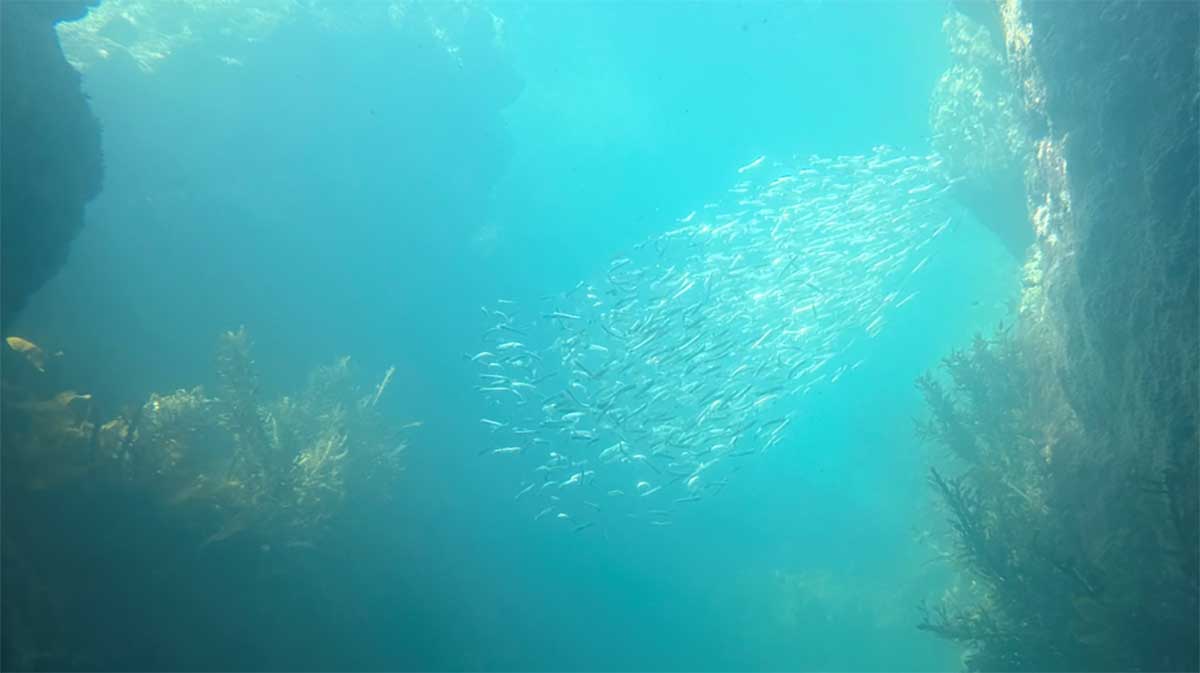
Yet despite all this, the latest advice from officials fails to move us meaningfully toward ecosystem-based management. The Hauraki Gulf Fisheries Plan includes a commitment to review the management of key forage species to “ensure that removals do not adversely affect the marine food chain.” But the current proposals do not deliver on that intent. Instead of aiming to rebuild abundance or account for the role of forage fish in the food web, the advice retains high catch limits for fish populations we know very little about. No stock assessments have been completed for kokowhāwhā / anchovy, kupae / sprat, takeke / garfish, aua / yellow-eyed mullet, or hautere / jack mackerel. We don’t know how many fish are out there, and we’re not using predator health or ecosystem indicators to guide decisions.
Instead, Fisheries New Zealand has proposed number-shuffling. The most recent proposals claim to reduce pressure by cutting catch limits, but the proposed limits are still higher than what’s actually being caught. That means there’s no real constraint on fishing effort. The door stays open for increases, even as the ecosystem shows stress.
Adding to the contradiction, tawatawa / blue mackerel—currently the single largest fishery by weight in the Hauraki Gulf—is proposed for an increase in catch. This species forms dense schools and plays a central role in mixed-species feeding events with dolphins and seabirds. At a time when ecosystem stress is evident, boosting the take of such an important forage species moves us in the wrong direction.
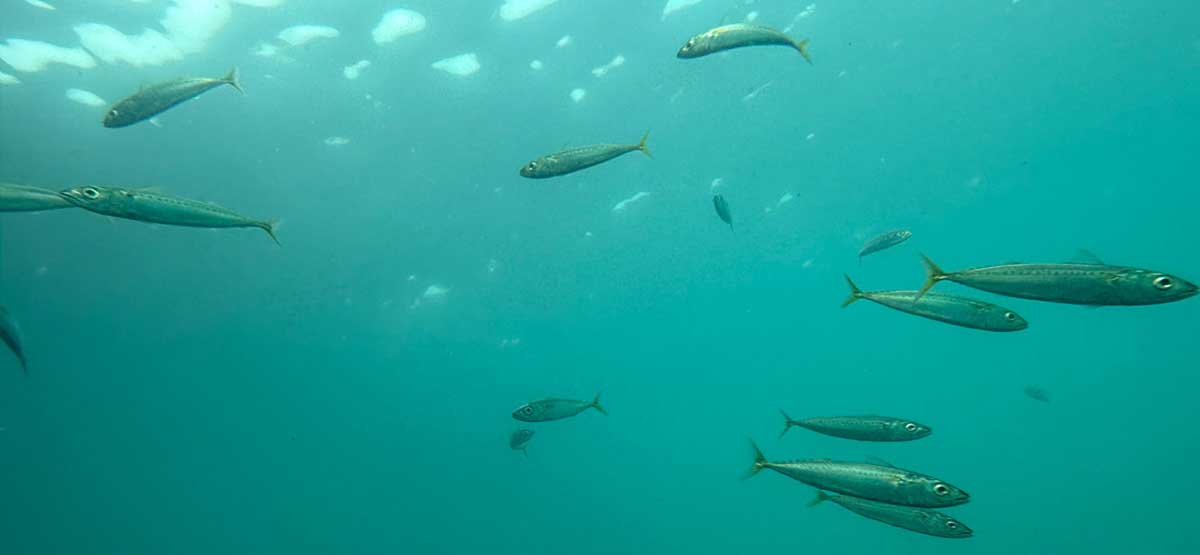
Climate change is only making this worse. These species are vulnerable to rising sea temperatures and declining plankton. We can’t control the oceans response to climate change, but we can control fishing. Leaving more fish in the water builds resilience for the species that depend on them.
Fisheries New Zealand is not proposing ecosystem-based management. It’s pretending to act without changing outcomes. If we were serious about managing the Gulf as a living system, we’d listen to the dolphins, whales and seabirds.
The forage base is the fastest thing we can fix. But only if we’re willing to try.
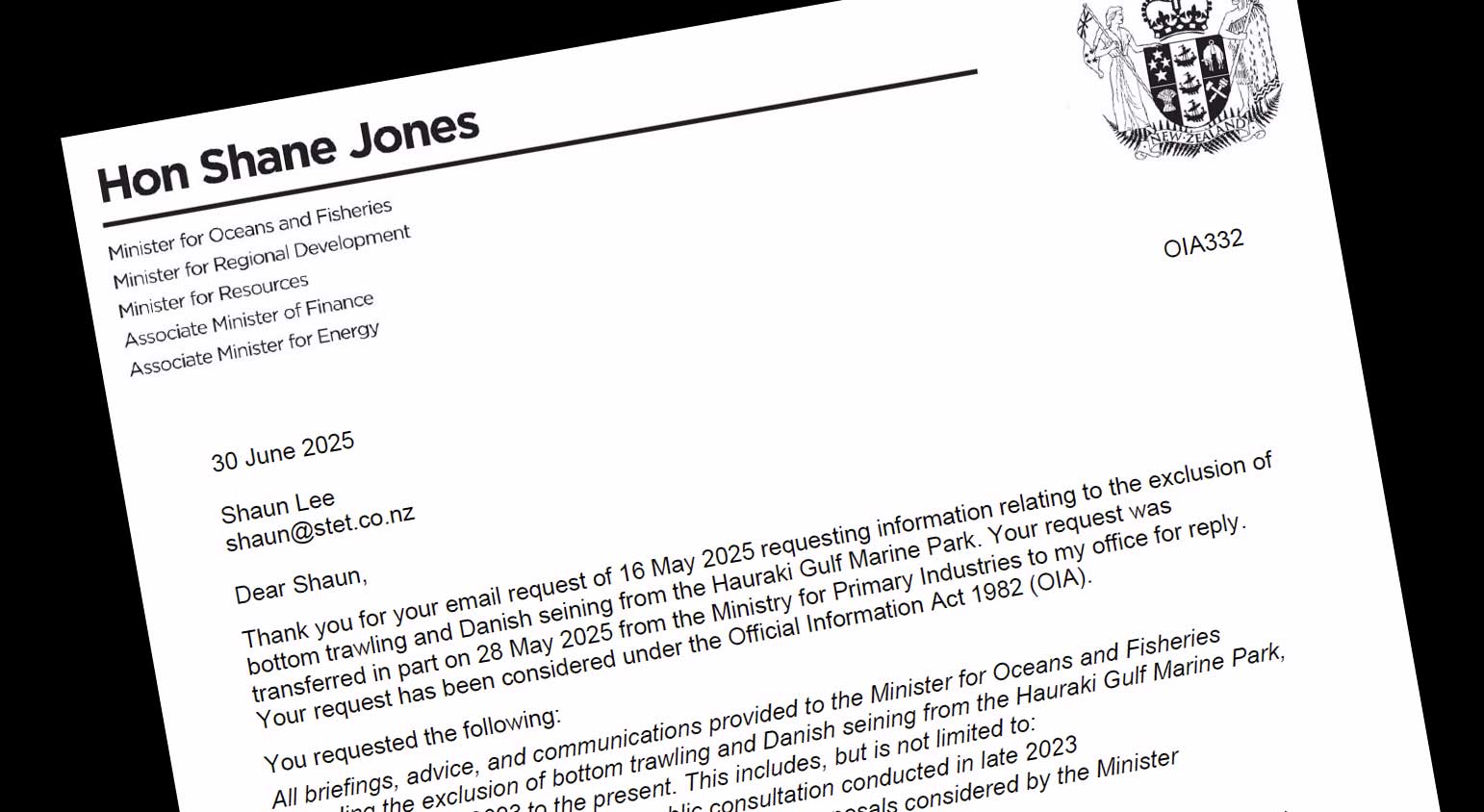
On 13 May 2025, my request for the missing Cabinet paper and Regulatory Impact Statement on excluding bottom trawling and Danish seining from the Hauraki Gulf was declined, as the work had not been completed and the Minister was still considering his options. So on the 16th of May I asked for all briefings, advice, and communications provided to the Minister for Oceans and Fisheries about the exclusion of bottom trawling and Danish seining from the Hauraki Gulf Marine Park, from 1 November 2023 to the present.
I finally received the advice today (though some information has been withheld).
Some things that I learnt:
Observer bycatch data for the period 2012 to 2022 reported non target captures of benthic species on 34.4 percent of all observed tows, however, this is likely an underestimate as many corals and other vulnerable species fragment during contact with trawl gear and may be lost through the mesh of the net. In addition, not all tows are observed (for example, 5.1 percent of tows in the Gulf were observed in the 2021/22 fishing year).
97.2% of 8,909 submitters want a full ban on bottom impact fishing in the Gulf, plus 1.4% of submitters wanted Option 4 (the option that protects the most seafloor).
A 36,589 signature petition from the Hauraki Gulf Alliance was presented to Parliament in June 2023 in support of a ban on bottom trawling, scallop dredging and Danish seining in the Gulf. This petition rarely features in briefings to the minister on the topic.
Four iwi or iwi organisations submitted through the public submission process, one of which advocated for a complete ban of bottom trawling and Danish seining. The three other iwi or iwi organisations that submitted did not choose any of the proposed options as
they believe it undermines their rights guaranteed under the Treaty of Waitangi and Māori Fisheries Settlement rights. I should ask which iwi.
These are the companies and staff that are lobbying for the continuation of bottom impact fishing in the Hauraki Gulf Marine Park:
Seafood NZ tried to suggest an Option 5 for the trawl corridors which even more destructive than those proposed by FNZ. They tried to kill the SPAs and are also responsible for ring-net fishing debacle: “allow ring-net fishing in inner gulf (Kawau Bay, Motukawao, Rotoroa, Rangitoto and Motutapu) HPAs over winter months” FNZ staff did an okay job of defending the MPAs and telling the minister the proposals from Seafood NZ were bad ideas. (Government did not listen and there was a media storm on the issue).
Form submissions were ignored by staff when presenting % submissions to the minister. E.g. 85% of submitters support Option 4 or a complete ban, when the actual number is 98.6%.
Seafood NZ and Rock Lobster Industry Council lobbied the minister enough that officials considered allowing potting in a marine reserve!
Great to see push back from staff that allowing these industry bodies to influence the process after consultation decisions had been made was/is not fair.
Interesting analysis of risks if trawl corridors abandoned:
Great to see FNZ consider that transitional support for affected fishers should be back on the table.
It’s a bit for me to reflect on but overall its just incredibly disappointing to see to see how the industry has been able to sway the Minister to delay a decision and stop a huge public process.
UPDATE 14 July 2025
In May I also asked for “Emails, memos, or meeting notes relevant to the decision-making process”. Apparently MPI could only find this one email.
UPDATE 31 July 2025
Request for mana whenua positions on limiting bottom impact fishing was ‘withheld‘. Good to see they consulted 23 mana whenua groups tho.
UPDATE 12 August 2025
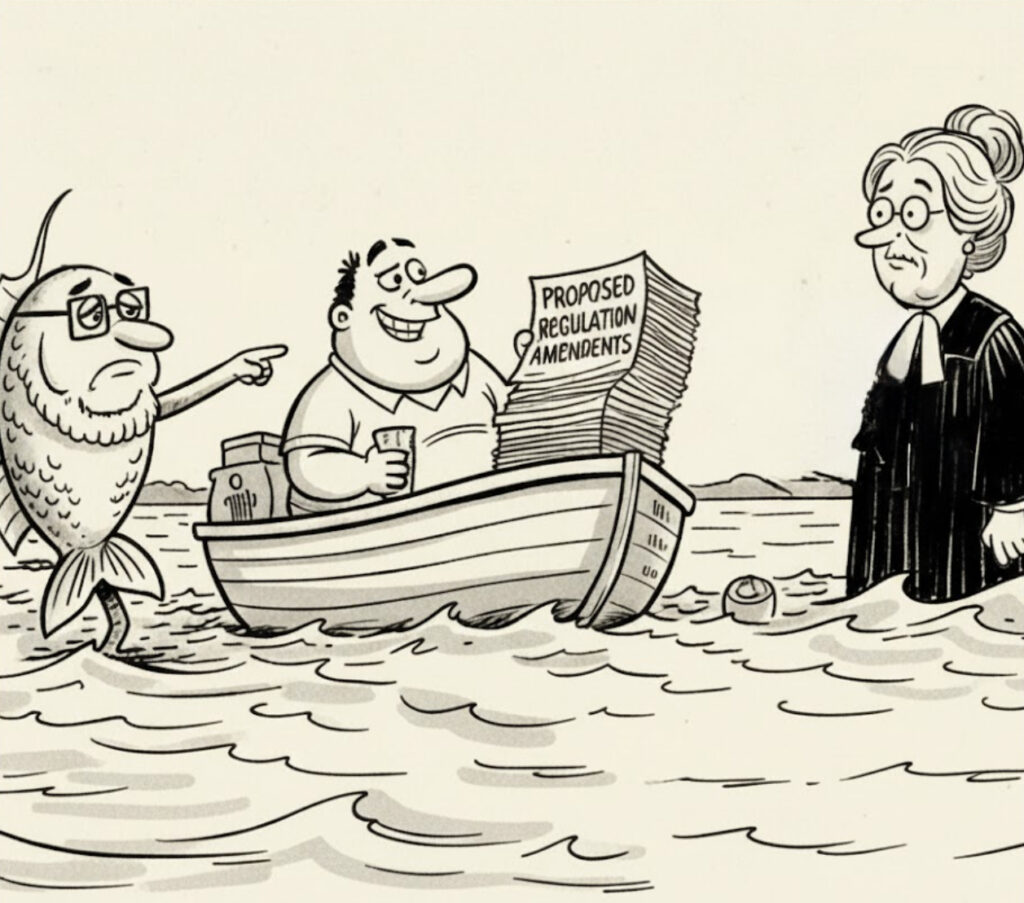
Seafood New Zealand’s Hauraki Gulf options and protection bill amendment papers. Note:
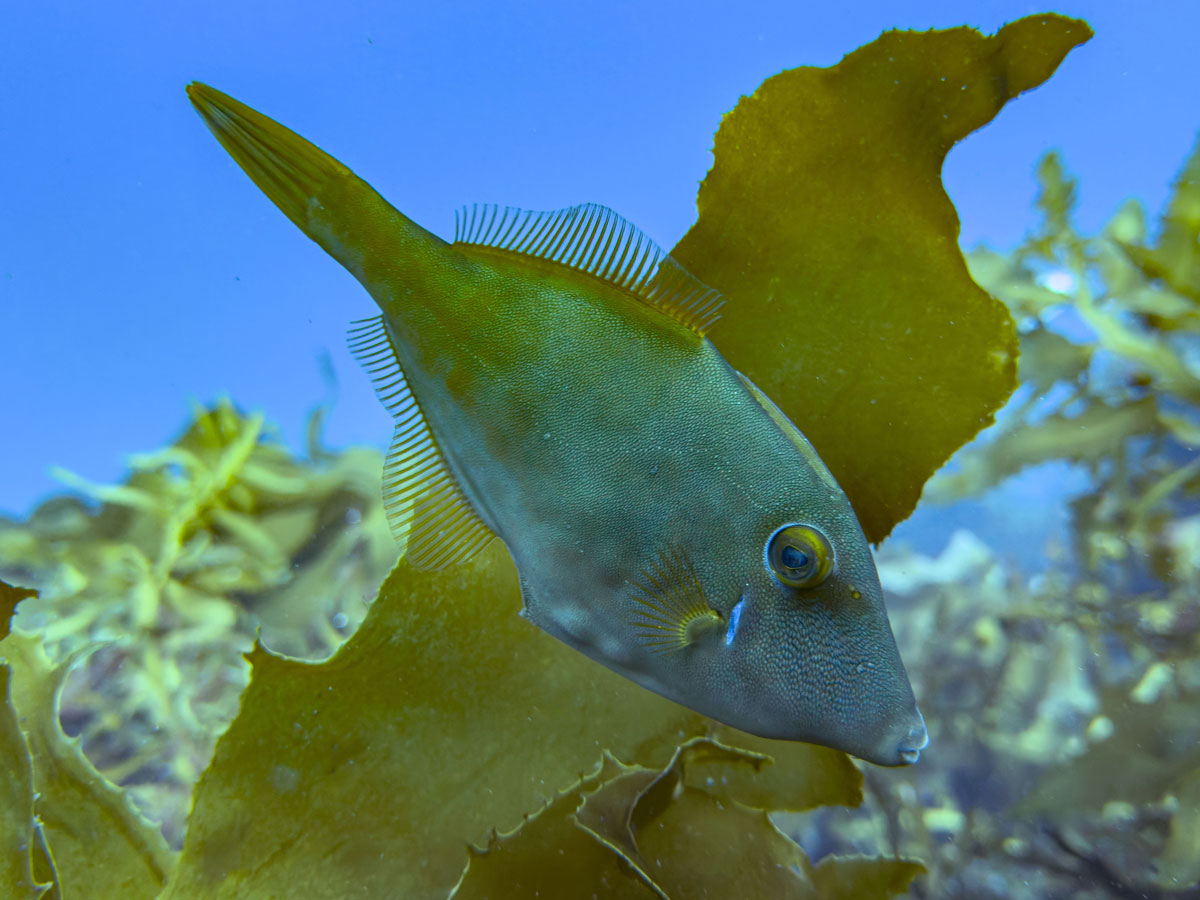
Commercial landings of kōkiri / leatherjacket in the Gulf have crashed by more than 80 percent in the past decade, yet Fisheries NZ says the population must be growing because new trawl gear lets more fish escape!
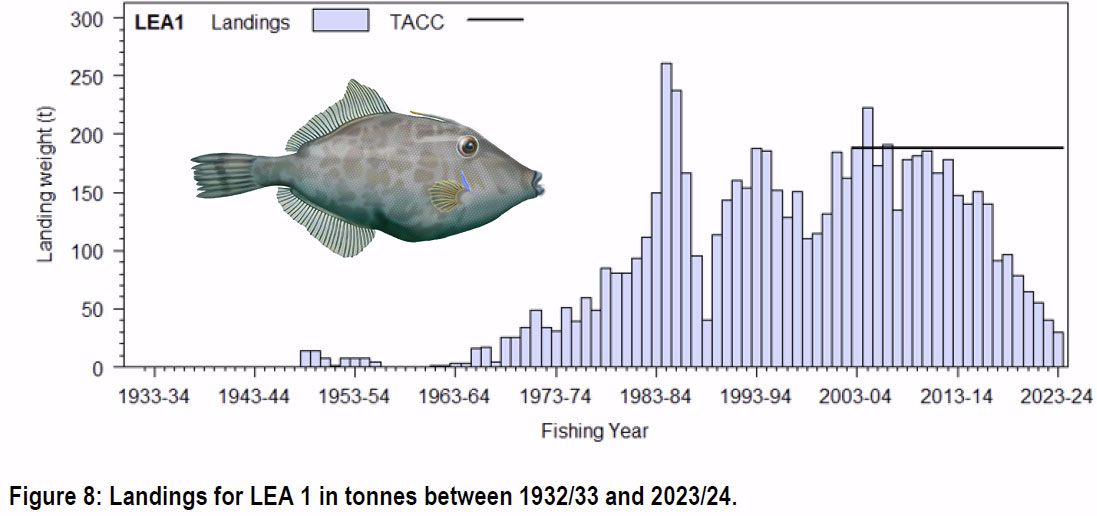
If you are not seeing more kōkiri then the catch decline is more likely indicating a population crash, and our friendly sea-squirt chompers are getting rarer while the catch limit stays sky-high. I’ve lodged a submission asking for a five-year closure of the LEA 1 fishery so these fish, and the reefs and mussel lines they keep clean, can recover.
Unless you’ve witnessed a sudden kōkiri boom yourself, please add your voice.
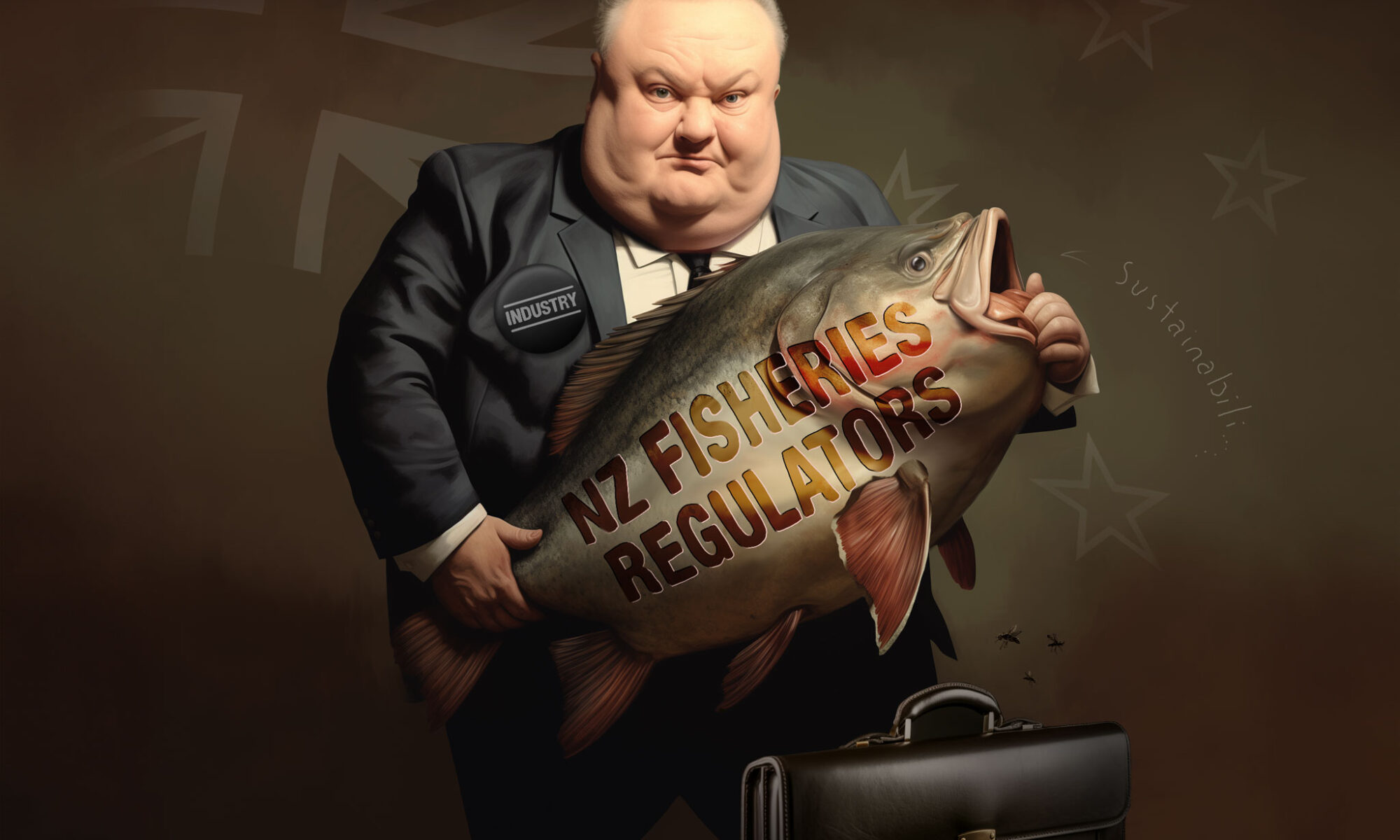
STET Ltd opposes all proposed amendments to the Fisheries Act. The changes prioritise commercial interests over ecosystem health, weaken regulatory oversight, and reduce public accountability. Key concerns include:
STET urges Fisheries New Zealand to adopt science-led, precautionary, and ecosystem-based management that upholds public interest over industry lobbying.
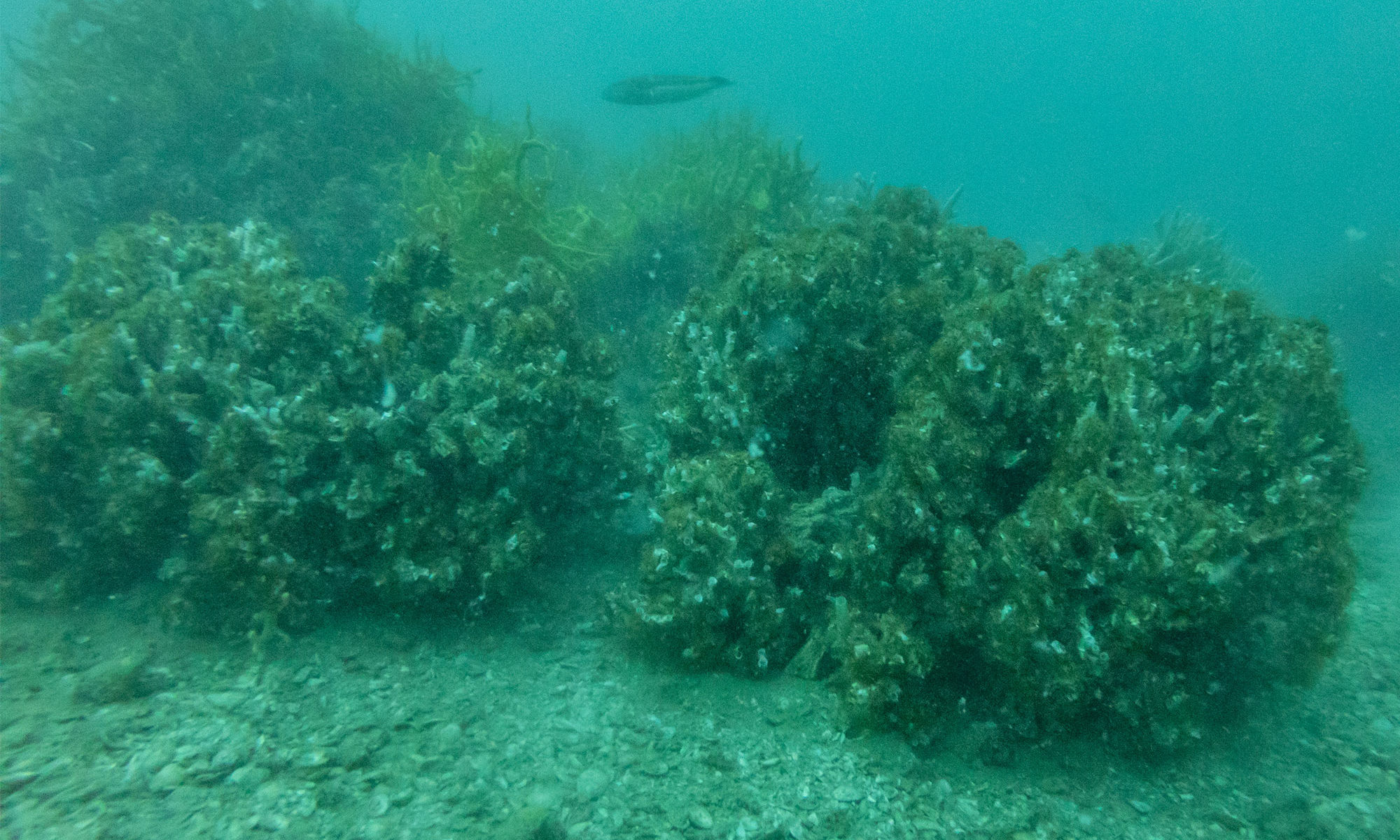
My speech to commissioners in the Waikato Regional Coastal Plan hearing on including fishing controls. There was some mention of tubeworm mounds beforehand so I also gave the commissioners an off-the-cuff intro to these ones which was appreciated.
Change in commercial landings in Waikato CMA 2005 to the most recent fishing year
The proposed Resource Management (Consenting and Other System Changes) Amendment Bill threatens to strip regional councils of their ability to regulate fishing impacts under the Resource Management Act (RMA). This shift would place decision-making solely in the hands of the Ministry for Primary Industries (MPI)—an agency primarily focused on fisheries extraction rather than ecosystem health.
This change ignores a key legal distinction: RMA-based marine protections are not about fisheries management but about safeguarding biodiversity, cultural values, and ecosystem integrity. The Motiti Decision confirmed that councils have the authority to protect marine habitats from fishing when necessary to maintain indigenous biodiversity.
The Fisheries Act has failed to protect marine biodiversity, as evidenced by the expansion of kina barrens in Northeastern New Zealand and the complete collapse of the commercial scallop fishery. If councils lose the ability to implement marine protections under the RMA, these problems will only worsen.
New Zealanders overwhelmingly support better marine protection, yet only 0.4% of our oceans are fully protected, placing us behind international standards. The Bill would make it harder to achieve meaningful protections, contradicting both public expectations and international commitments like the 30×30 initiative.
The RMA already allows for 10-year marine protection areas, providing a practical and adaptable tool for ecosystem recovery. Removing this mechanism would take away a proven, community-driven conservation tool.
We oppose the Bill and urge the Select Committee to reject these restrictions, retain regional councils’ ability to manage fishing impacts, and ensure marine protection remains in the hands of local communities—not just the fishing industry. Now is the time to strengthen protections for our oceans, not weaken them.
The STET LTD submission
Make your submission here
UPDATE: Speech presented 03/03/2025
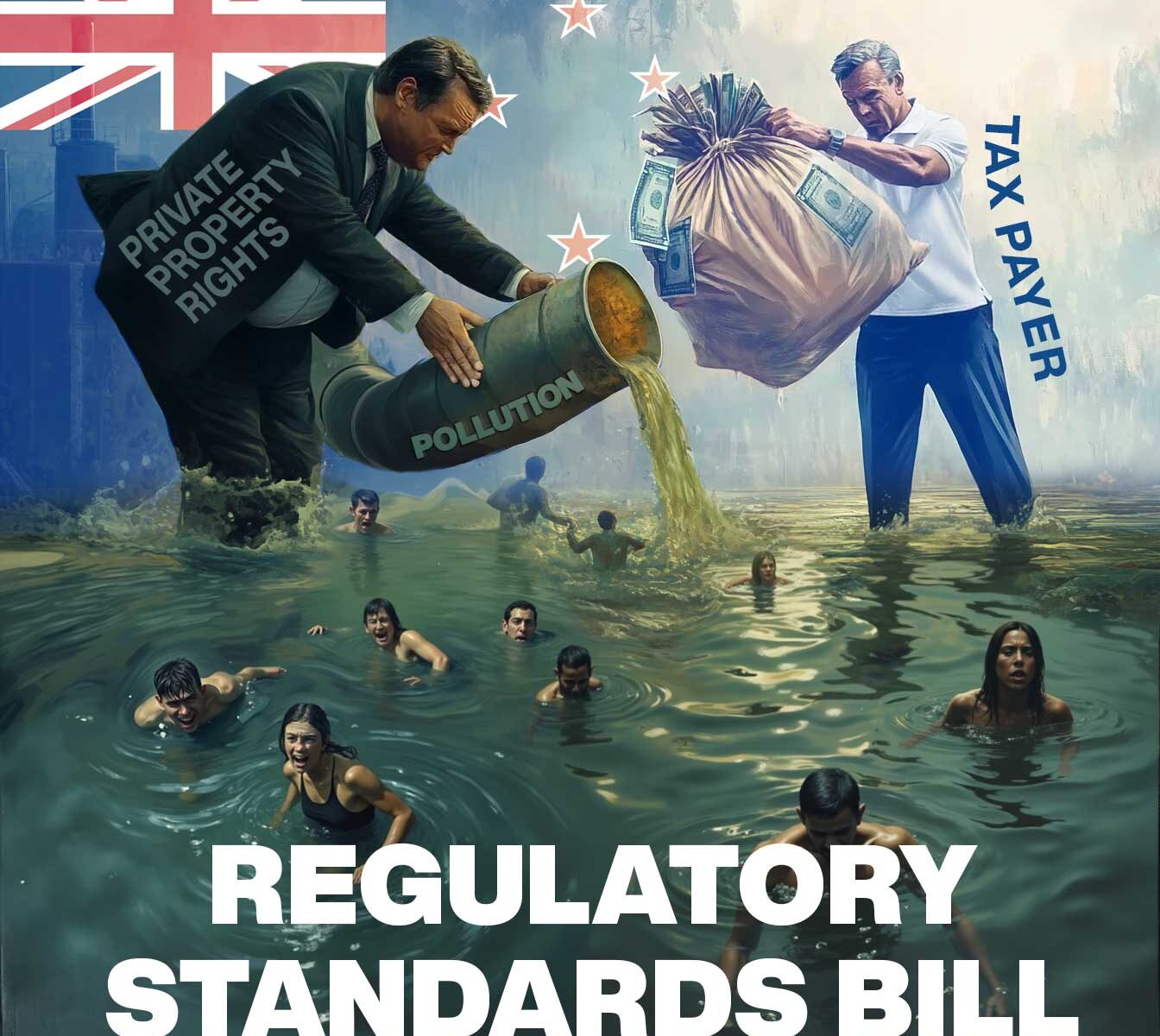
The proposed Regulatory Standards Bill prioritises private property rights over collective environmental interests. It asserts that “legislation should not take or impair, or authorise the taking or impairing of, property without the consent of the owner unless: there is good justification for the taking or impairment, fair compensation is provided to the owner, and compensation is provided to the extent practicable by or on behalf of the persons who obtain the benefit.” While this protects individual property owners, it could discourage essential regulations, like wetland protections or agricultural runoff controls, by imposing significant compensation burdens. This approach overlooks the shared value of ecosystems and the collective responsibility to safeguard them for future generations.
Submission on the Regulatory Standards Bill discussion document here
Update 05 June 2025: None of STET’s original advice was meaningfully taken into account in the final wording, our submission on final Regulatory Standards Bill here

I am publishing my draft submission on CRA 2 early. Key points below: