I made these graphics for Auckland Council to show people how to make healthier and more resilient waterways. It’s awesome to see informed leadership on attitudes to rural and urban land use.


Mostly just stuff I am doing to help the planet

I made these graphics for Auckland Council to show people how to make healthier and more resilient waterways. It’s awesome to see informed leadership on attitudes to rural and urban land use.

Artificial reefs have significant potential to boost fish populations, even surpassing pre-fished levels or what is possible in marine reserves. However they have a checkered history overseas, with many reefs:
When considering building an artificial reef, it is crucial to determine whether it will provide additional habitat to support reef communities or merely function as a Fish Aggregation Device (FAD). Like artificial reefs, FADs are man-made structures which are attract fish to a specific area by providing habitat and shelter for marine life. The problem with FADs is that they decrease local fish populations by concentrating them in one area where they are easily targeted by fishers (Cabral et al. 2014) as illustrated below.

To define the size of the habitat required to avoid FAD functionality, you could base it on the home range of each fish species you want to increase. For example:
The most studied fish in the Hauraki Gulf is the tāmure / snapper, which show high site fidelity to reef habitats. Tāmure in deep soft sediment habitats are quite mobile, with a median distance of 19 km, and some movements up to 400 km. In contrast tāmure in shallow rocky reef habitats have restricted movements, with a median distance of 0.7 km (Parsons et al. 2011). You can see this in small marine reserves with shallow rock reefs, such as the 5 km² Cape Rodney – Okakari Point Marine Reserve (Goat Island), which effectively increase the size and abundance of this species. Additionally, tāmure around mussel farms have been found to be healthier than those in surrounding soft sediment habitats (Underwood 2023). The studied mussel farms were near rocky reefs and covered about eight hectares (200 x 400m).
This means fished artificial reefs should be deployed at hectare scales to avoid acting as population sinks. For tāmure, an area about the size of eight rugby fields is a considerable undertaking, but to avoid your reef functioning as a FAD for fishing, it is essential to spread your structure over a large area. If this sounds more like ‘habitat enhancement’ than an artificial reef, then perhaps that is a better way to frame your design. Of course, this consideration is unnecessary if your artificial reef is not fished.
REFERNCES
Bracho-Villavicencio et al., 2023 https://doi.org/10.3390/environments10070121 A Review of the State of the Art and a Meta-Analysis of Its Effectiveness for the Restoration of Marine Ecosystems. Environments.
Cabral et al., 2014 https://academic.oup.com/icesjms/article/71/7/1750/664488 Modelling the impacts of fish aggregating devices (FADs) and fish enhancing devices (FEDs) and their implications for managing small-scale fishery
Gauff et al., 2023 https://doi.org/10.1016/j.jembe.2023.151882
Unexpected biotic homogenization masks the effect of a pollution gradient on local variability of community structure in a marine urban environment.
Parsons et al., 2003 https://www.researchgate.net/publication/225304000_Snapper_Pagrus_auratus_Sparidae_home_range_dynamics_Acoustic_tagging_studies_in_a_marine_reserve Snapper Pagrus auratus (Sparidae) home range dynamics: Acoustic tagging studies in a marine reserve
UnderwaterTimes.com 2006
https://web.archive.org/web/20170912095117/https://www.underwatertimes.com/news.php?article_id=36210951740 Two Million Tire Artificial Reef to be Removed Off Florida Coast; Smothering Corals
Underwood et al., 2023 https://www.aquaculturescience.org/content/dam/tnc/nature/en/documents/aquaculture/AquacultureHabitatComparativeReport.pdf Habitat value of green-lipped mussel farms for fish in northern Aotearoa New Zealand
Zhang et al., 2019 https://doi.org/10.1016/j.scitotenv.2019.134768
Microplastic pollution in water, sediment, and fish from artificial reefs around the Ma’an Archipelago, Shengsi, China.

In an article titled “Shane Jones sets sights on killer kina – An industrial grade problem” the Fisheries Minister Shane Jones is quoted as saying “Some ecologists say it’s related to overfishing but the evidence is not conclusive in that regard. From my perspective as Fisheries Minister, I can provide some practical tools through the law, to allow local communities to go and cull them.”
The consultation document on the proposed tool provides a definition of kina barrens and clearly explains they are formed by a “low abundance of predator species“.
I was concerned that our Fisheries Minister could be so poorly informed so I asked Fisheries New Zealand for:
Fisheries New Zealand replied in detail today with recent information that has been provided to the Minister with respect to kina and kina barrens (note I have run the scanned pages through a text recognition software).
Fisheries New Zealand have clearly supplied conclusive evidence that kina barrens are related to overfishing. They have not supplied any research findings that corroborate the Minister’s statement that the cause of kina barens is inconclusive. I don’t know where Shane Jones is getting his alternative facts.
Of interest (and to his credit) Shane Jones has asked staff to increase the pace on starting pre-engagement to identify voluntary and/or regulatory measures to support increased large rock lobster abundance in areas with kina barrens (p25, detail on p21). Progress on this workstream seems to have been withheld and its clearly delayed as the other (extractive) measures mentioned have been consulted on. Two new measures that staff have suggested include a Maximum Legal Size Limit for Lobster and ‘Catch Spreading’.
While we wait for government action, millions of kina relentlessly devour our kelp forests.

This summer Tōrea pango / Variable Oystercatcher have nested for the first time at Tahuna Torea Nature Reserve (written records began in the 1970’s). Its also the first time any bird has nested on the man-made shorebird roosts (or islands) in the lagoon. Tōrea Pango are recovering from being threatened with extinction and are one of the most endangered breeding birds in the Eastern Songbird Project area. The nearest breeding area is Motukorea / Browns Island which is a population sink for the species. The reserves name ‘torea’ does not come from this species but the South Island Pied Oystercatcher which once gathered here in great numbers.
The two egg nest was laid days after I trimmed the vegetation on Kuaka Island mid November 2023 as part of a roost restoration project. A team of local bird watchers kept a close eye on the nest. The mud in the lagoon keeps the cats out, but not the rats, the trapping team stepped up efforts and rats stopped turning up on the trail camera. One of the eggs was not fertile but the other one was and the bird watching team was thrilled when a chick hatched just in time for Christmas.
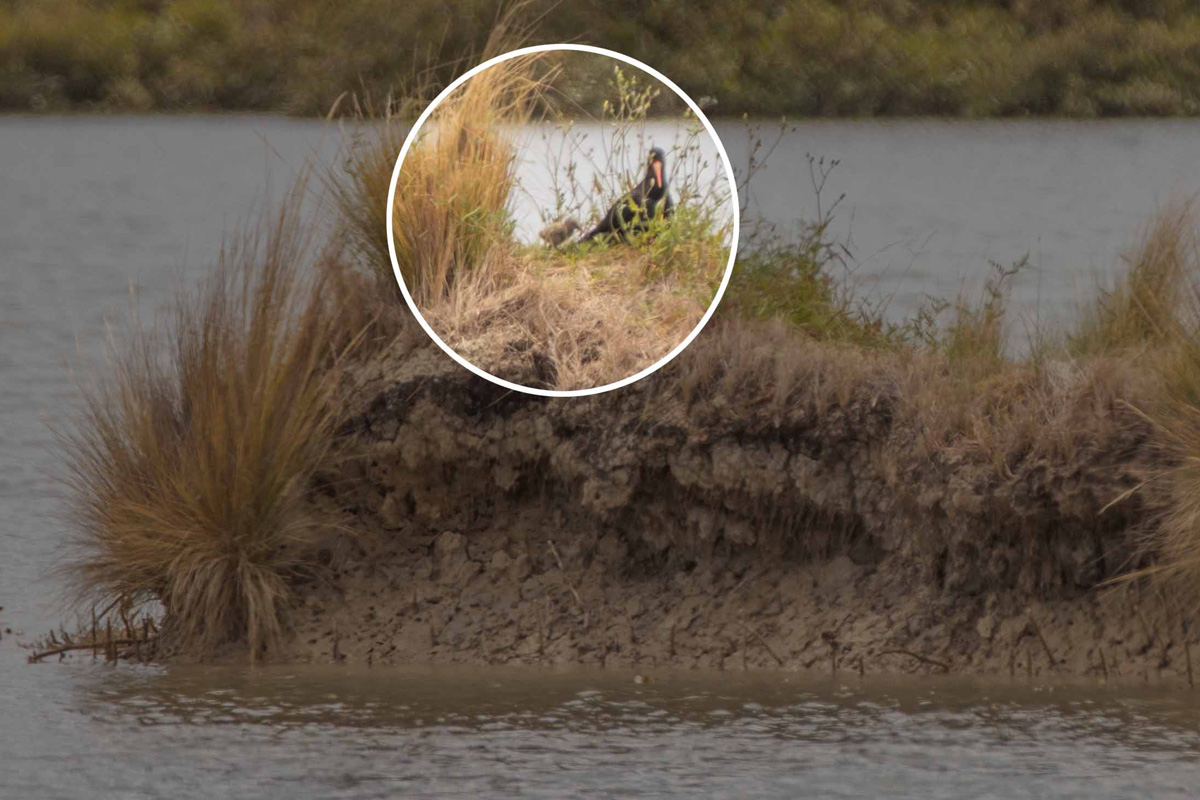
The nest would not likely have survived a kiteboarding event in the lagoon. Thanks to the kiteboarders for volunteering to stop kiting in the lagoon at high tide. If you do see anyone kiting in the lagoon phone me 021 555 425 and I’ll have a chat to them.

It was interesting that after nesting on Kuaka Island where I had trimmed vegetation and where a small amount of mangroves have been removed (not the majority) the parents then took the chick 400 m southeast to Cable Beacon Point. New mangrove stumps here were used by the chick to hide. I put up a sign and the bird watchers were on high alert for a few weeks until the chick fledged. The Tōrea pango whanau have stayed in the area which is a great endorsement of the reserve from our feathered friends and a huge win for our shorebird habitat restoration efforts.


It’s been a busy month with many submissions due.
Proposed Bottom Fishing Access Zones in the Hauraki Gulf Marine Park

LegaSea are asking their supporters to object to the Hauraki Gulf Marine Protection Bill due to concern’s about displacement.
“We do not believe the proposed protection measures go far enough to restore fish abundance and biodiversity in the Hauraki Gulf. Marine protection and fisheries management controls need to go hand-in-hand, otherwise all we will do is shift current fishing effort into our neighbour’s waters. We want 100% of the Hauraki Gulf seafloor protected from destructive, mobile fishing methods including bottom trawling, Danish seining and dredging. And, we want Ahu Moana, a joint iwi/hapū and community driven solution to resolve local depletion issues.” (Full email published here).
If we forget about the many non-fishing benefits of marine protection, then also forget about the fisheries benefits of marine protection (nursery and spillover) then forget about the fisheries plan which aims to rebuild stocks including Ahua Moana we are left with LegSea’s naïve argument over a limited amount of fish. Does it stand up?
No, the recreational losses for all species fished in the HPAs total 293 tonnes, the proposed commercial reductions from the corridors will total between 632-1017 tonnes.
Update January 2024. Marine scientists at the University of Auckland have done some excellent work looking at the displacement argument.
Calculating the weight of recreational catch lost to HPAs
Recreational fishers harvested 2,068 tonnes of snapper from the HGMP in 2017/18 fishing year. 9.58% of the recreational fishing effort is in the proposed High Protection Areas. The HPAs will reduce recreational fisheries catch of snapper by 198 tonnes.
Recreational fishers harvested 517 tonnes of kahawai from the HGMP in 2017/18 fishing year. 9.58% of the recreational fishing effort is in the proposed High Protection Areas. The HPAs will reduce recreational fisheries catch of kahawai by 50 tonnes.
These two species represent 82% of the fish (by weight) caught in the Gulf in the 2017/18 fishing year.
– https://gulfjournal.org.nz/wp-content/uploads/2020/02/State-of-our-Gulf-2020.pdf
Recreational catch in the HPAs for the 2017/18 fishing year = 248 + 18% (45) = 293 tonnes.
Calculating the weight of commercial catch lost to trawl corridors
Option 1 would result in an estimated reduction in landings of approximately 632 tonnes of fish per year. Option 4 would result in an estimated reduction in landings of approximately 1017 tonnes of fish per year.

I spent a few days going through the 7,550 submissions on protections proposed by Revitalising the Gulf. I’m estimating 77%-90% of the submissions were positive about the protection proposals. However huge numbers concerned about the continuation of bottom impact fishing outside the protected areas and cultural take inside them. So there is a general need for more protection. This level of public support for marine protection can be expected and can be seen in Polling from the Hauraki Gulf Form, Submissions on the recent Waiheke Marine Reserve Proposal and the Live Ocean Barometer 2023.
Most of the names were redacted from the submissions but the organisation names were left public. Here are the names of the organisations that made significant submissions.
| OPPOSED | PARTIALLY SUPPORT | SUPPORT |
| Legasea 2xs Charters / Balmain Boating Services Alan Seasprite Charters CRA 2 Rock Lobster Management Co Dr Hook Charters Fisheries Inshore NZ Kina Industry Council Mercury Bay Game Fishing Club NZ Rock Lobster Industry Council New Zealand Charter Boat Association New Zealand Sport Fishing Council Paua Industry Council Princess Carol Charters Provider Adventures Ltd Sea Urchin NZ Ltd Seahawk Fishing Charters Slipper Island Residents Association Snap Attack Specialty & Emerging Fisheries Group Tairua Adventures Ltd / Artisan Fishing Co Te Ohu Kaimoana Te Ra Charters The New Zealand Angling & Casting Association Whitianga / Coromandel Peninsula Commercial Fisherman’s Association |
Aldermen Islands Marine Reserve Group Friends of the Hauraki Gulf Mama Fish Sanford Limited |
Forest & Bird Revive Our Gulf Auckland City Centre Residents Group Auckland Conservation Board Auckland Council Auckland Sea Kayaks Auckland Sea Shuttles Coromandel Marine Farmers Association Devonport Yacht Club Environmental Defence Society Foundation North Friends of Taputeranga Marine Reserve Trust Goat Island Dive and Snorkel Good Fishing Hahei Residents and Ratepayers Association Leigh Penguin Project Live Ocean Foundation Meadowbank School Marine team Motuora Restoration Society Mountains to Sea Conservation Trust New Zealand Conservation Authority New Zealand Geographic New Zealand Marine Sciences Society Ngāti Hei Ngāti Manuhiri Settlement Trust Ocean Voyages Inc Pakiri Community Landcare Group Pest Free Kaipātiki Ports of Auckland Limited Shakespear Open Sanctuary Society Inc Sir Peter Blake MERC Stet Supporters of Tiritiri Matangi Te Whanau o Pākiri The Friends of Te Whanganui‐A‐Hei Marine Reserve Trust The Glass Bottom Boat Whitianga The Hauraki Gulf Conservation Trust The Hauturu Supporters Trust Tāmaki Estuary Protection Society Tāwharanui Open Sanctuary Society Inc Waiheke Marine Project Waikato Regional Council Wakatere Boating Club Yachting New Zealand |
| Most of these submitters were upset about continued bottom impact fishing in the Gulf. Most of the Charter fishers all sent in the same submission. | These submitters indicated support for marine protection but did not express that much support for the proposed measures: | Most of these submitters wanted more protection than what was proposed and also wanted bottom impact fishing banned. |
I have not published the names of many organisations who used the LegaSea form as those submissions contained dramatically less information than those from the above organisations. They were mostly small owner operator companies who are also keen fishers. The big Purse Sein operator Pelco NZ Ltd and Te Ahu wai o Tangaroa sustainable ecological aquaculture did make significant submissions but they did not speak to the protection proposal.
In response to the submissions the Department of Conservation has reduced the amount of protection. Submissions are now open on the Hauraki Gulf / Tīkapa Moana Marine Protection Bill.
P.S. These bottom impact fishing effort maps were made public by Fisheries Inshore NZ and are useful in considering the proposed ‘trawl corridoors’.


Over 10,000 submissions on the Hauraki Gulf Fisheries Management Plan are likely to be the largest data set of opinions on fisheries management in Aotearoa and definitely the largest in the Hauraki Gulf Marine Park.
This copy is displayed when asking for public submissions:
Submissions are public information
Note that all, part, or a summary of your submission may be published on this website. Most often this happens when we issue a document that reviews the submissions received.
People can also ask for copies of submissions under the Official Information Act 1982 (OIA). The OIA says we must make the content of submissions available unless we have good reason for withholding it. Those reasons are detailed in sections 6 and 9 of the OIA.
If you think there are grounds to withhold specific information from publication, make this clear in your submission or contact us. Reasons may include that it discloses commercially sensitive or personal information. However, any decision MPI makes to withhold details can be reviewed by the Ombudsman, who may direct us to release it.
I’m disappointed that Fisheries New Zealand has not released all the submissions citing section 18(f) of the OIA—that the information requested cannot be made available without substantial collation or research.
I’m going to read over the submissions provided (which are substantial) before asking for more detail.
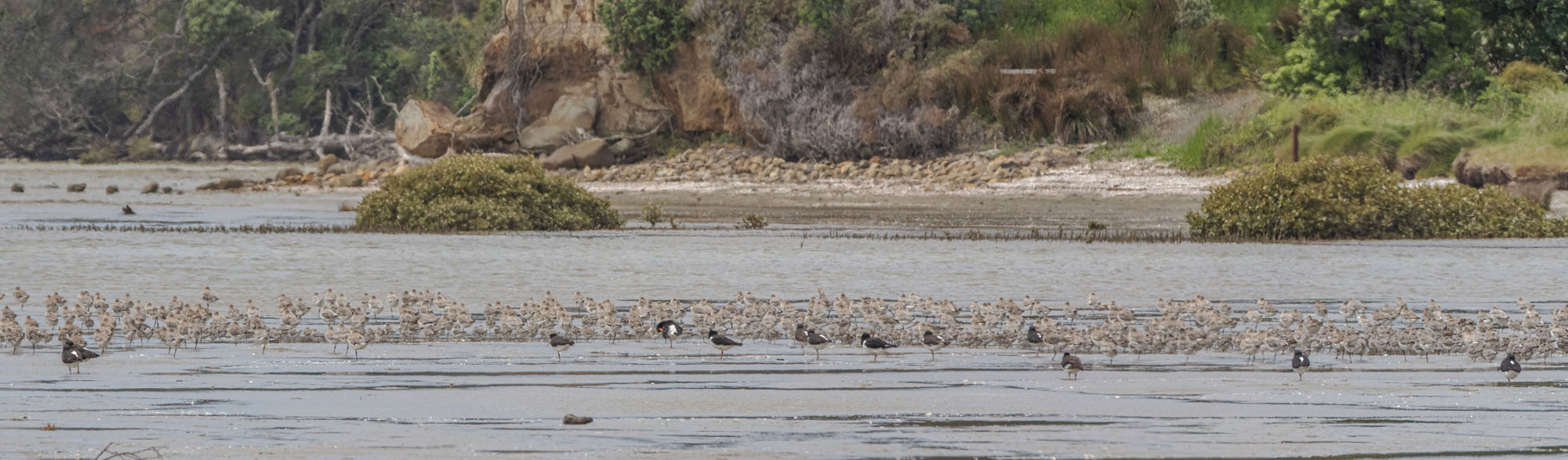
Our feedback on the strategy asks Auckland Council to consider the impacts development has on shorebirds and to identify shorebird feeding, roosting and nesting habitat losses due to Sea Level Rise. Post your feedback here.
