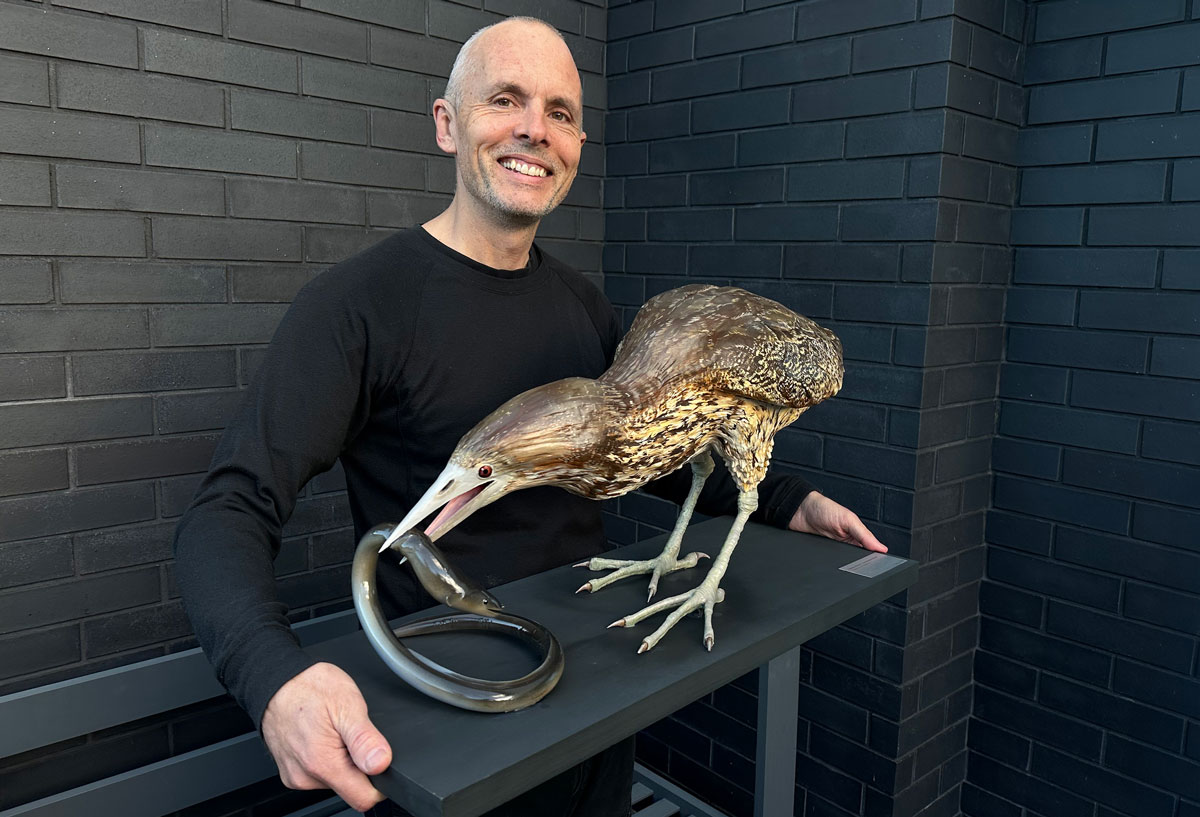
This was the biggest thing I’ve ever 3D printed.
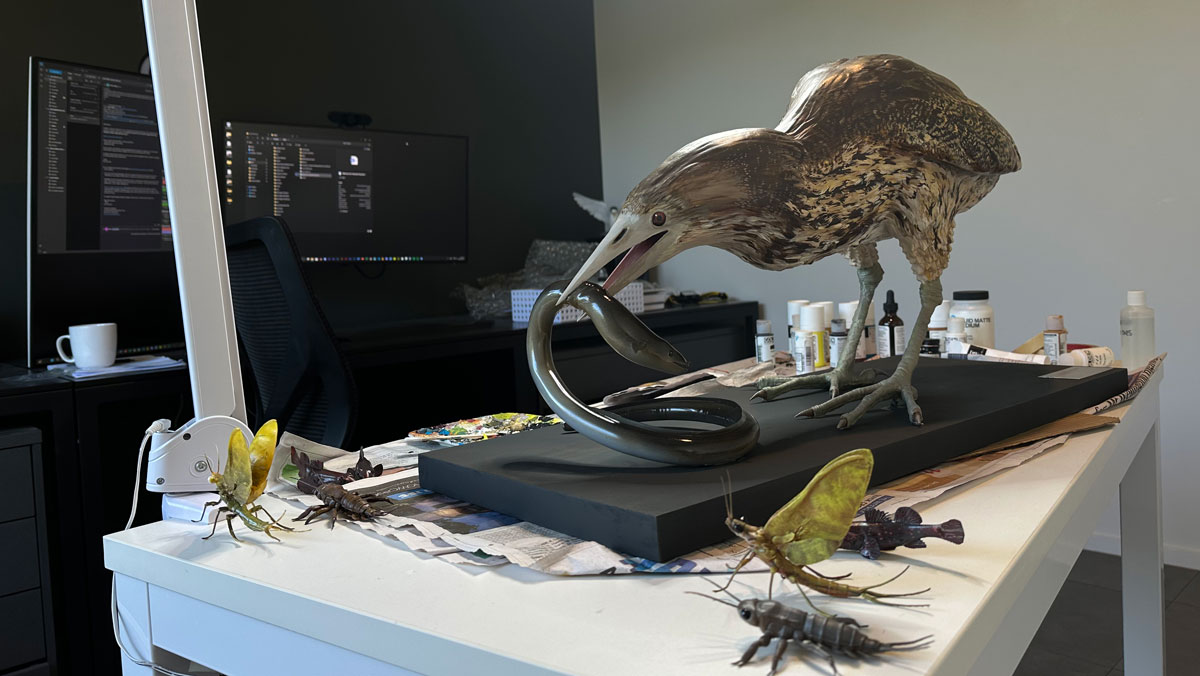
Even with my large-format printer, I had to split the matuku hūrepo / Australasian bittern into several parts and carefully assemble it. Painting took just as long – their plumage is incredibly detailed, with streaked patterns designed for camouflage in raupō wetlands.
I posed the bird predating a tuna / eel, not just to tell a story of predator and prey, but to help balance the sculpture. At this size and weight, I needed three contact points with the base to keep it stable – the legs and the eel.
Auckland Council is using the model for advocacy, helping people connect with these rare and cryptic wetland birds. Unlike a fragile taxidermied specimen, this 3D-printed bittern can be touched – perfect for tamariki and public events.
Thanks to the Auckland Museum for letting me scan one of their bitterns to get the scale right.
Matuku hūrepo are in serious trouble – they’re Threatened – Nationally Critical, with fewer than 1,000 adults left in Aotearoa. Despite being one of our largest wetland birds, they’re rarely seen. Over 90% of New Zealand’s wetlands have been drained or destroyed, leaving bittern with fewer places to breed, feed and hide. Hopefully, this model helps change that by bringing people face to face with a bird they may never see in the wild.