The dairy–palm oil death spiral

Dr Mike Joy sent me this paper Flex commodities and intertwining world-ecologies: Indonesian palm waste as an environmental fix in the New Zealand dairy industry to read. It’s pretty technical, so I made a graphic summary to share.


It shows how depressing the dairy–palm oil death spiral really is: New Zealand’s droughts drive more palm kernel imports, which fuel deforestation in Indonesia, worsen climate change, and circle back to make our droughts even worse.
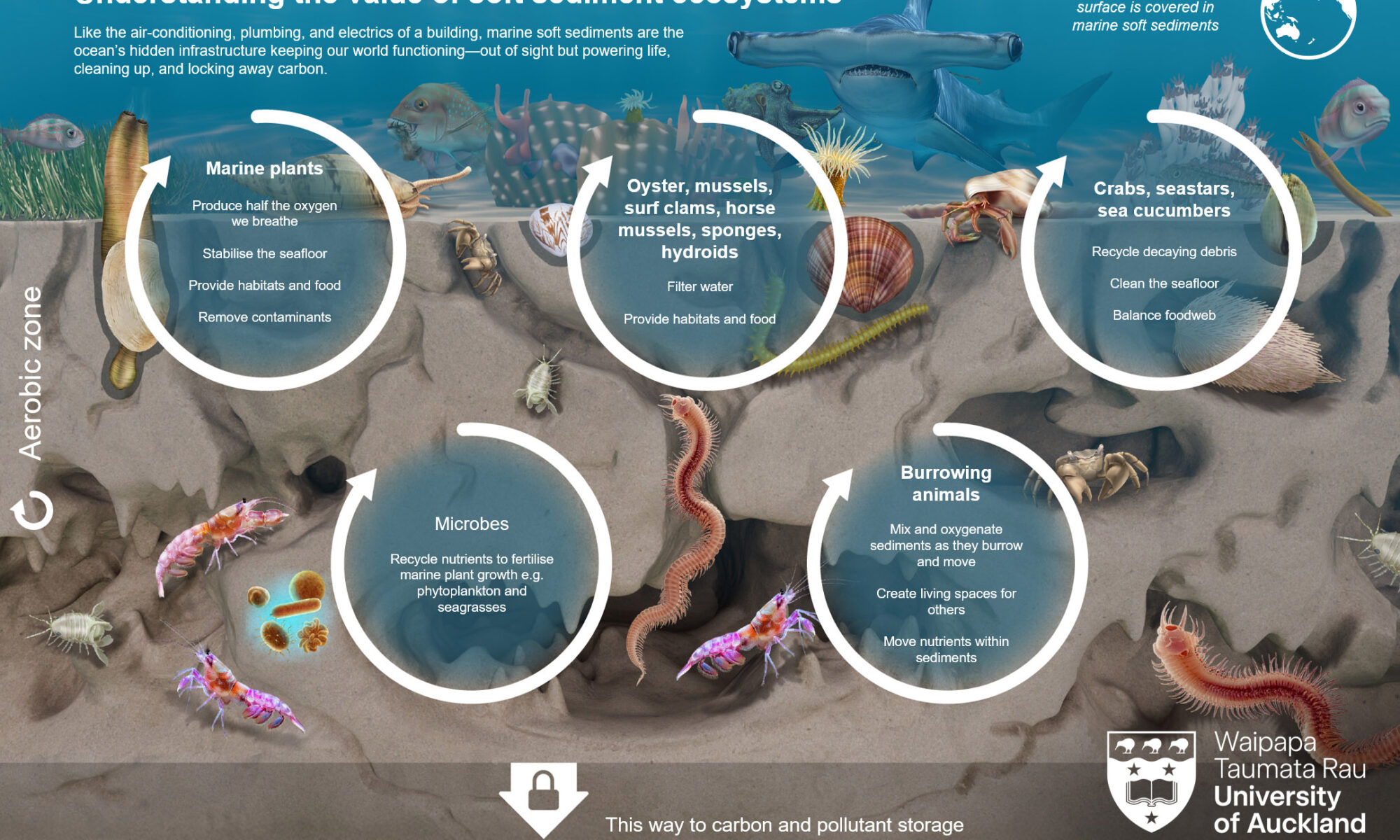
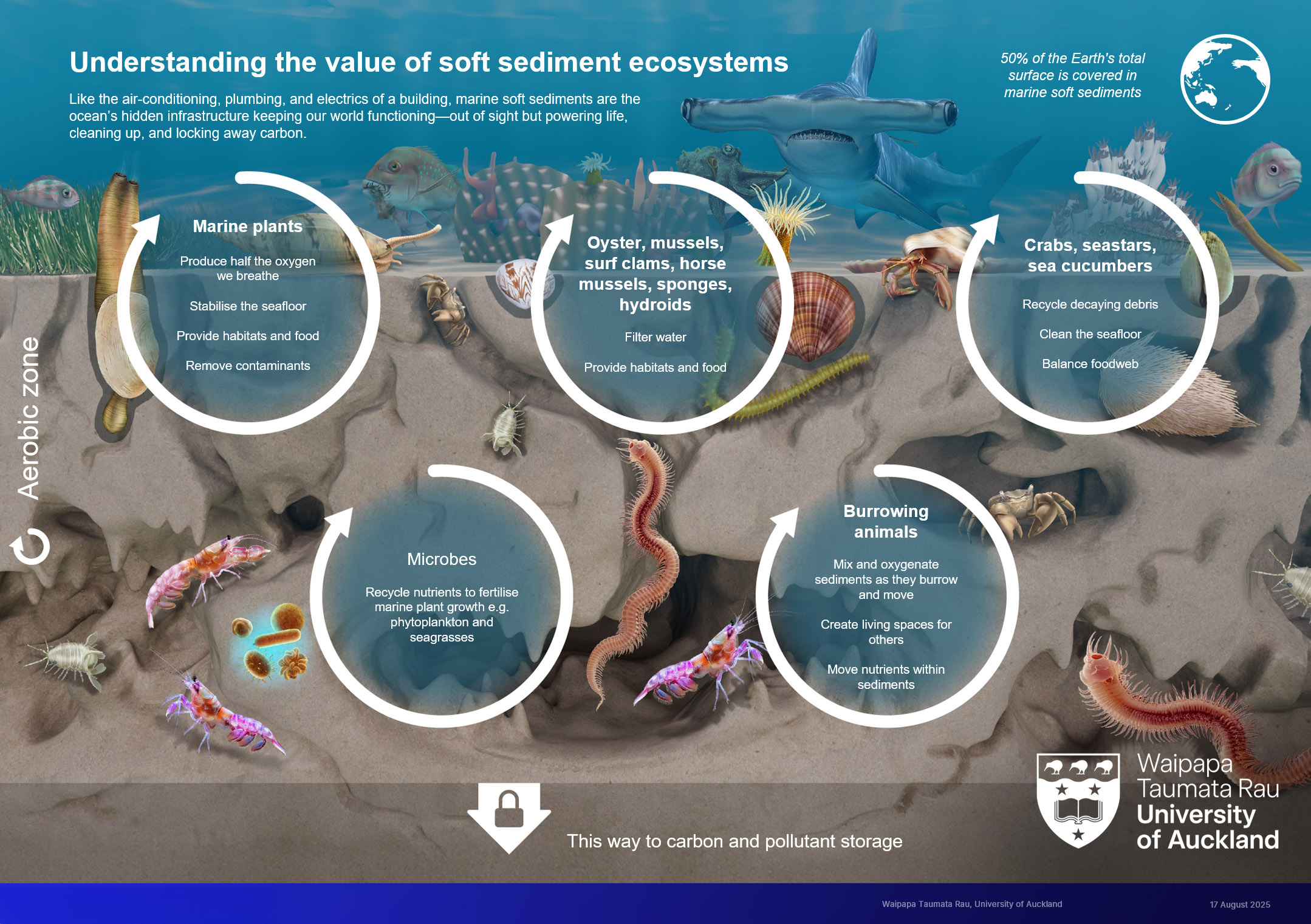
Understanding soft sediment ecosystems

Proud to share this new graphic made with world-leading soft sediment scientists at the University of Auckland.

Soft sediments cover 50% of Earth’s surface and quietly power ocean health — producing oxygen, filtering water, recycling nutrients, creating habitats, and locking away carbon and pollutants.

Out of sight, but vital for life.

Marine plants stabilise the seafloor, provide habitats, remove contaminants, and produce half the oxygen we breathe.

Filter feeders like oysters, mussels, clams, and sponges clean the water and create habitats for other species.

Crabs, sea stars, and sea cucumbers recycle decaying debris and balance food webs.

Burrowing animals mix and oxygenate sediments, moving nutrients and creating living spaces.

Microbes recycle nutrients to fertilise marine plant growth, powering life in the ocean.

Turtles of Aotearoa

Turtles of Aotearoa 7 species of sea turtle in the world 5 recorded in New Zealand 2 more frequently seen here Nearest nest sites in Australia and New Caledonia Navigate using earths magnetic field Forage near the coast eating algae and sea slugs Threatened with extinction, dying here from marine plastic boat strike and fishing The regional subpopulation is expected to go extinct in 40-80 years Nest in Papua New Guinea, and Solomon Islands Forage offshore on jellies in the water Frequently caught by tuna fishers, with no efforts to reduce bycatch in leatherback hotspots Up to 1.5 m long Up to 2.7 m long Green sea turtles Leatherback sea turtles Loggerhead Green Leatherback Olive Ridley Hawksbill

After finding a green sea turtle in Devonport and reading about leatherback sea turtle bycatch I decided to do some research on what was going on with turtles in New Zealand. I made a graphic summary.

Turtles of Aotearoa 7 species of sea turtle in the world 5 recorded in New Zealand 2 more frequently seen here Nearest nest sites in Australia and New Caledonia Navigate using earths magnetic field Forage near the coast eating algae and sea slugs Threatened with extinction, dying here from marine plastic boat strike and fishing The regional subpopulation is expected to go extinct in 40-80 years Nest in Papua New Guinea, and Solomon Islands Forage offshore on jellies in the water Frequently caught by tuna fishers, with no efforts to reduce bycatch in leatherback hotspots Up to 1.5 m long Up to 2.7 m long Green sea turtles Leatherback sea turtles Loggerhead Green Leatherback Olive Ridley Hawksbill
Turtles of Aotearoa

Big thanks to Clinton Duffy for the review.

Changes in reporting for inshore fishing boats with cameras

There is some confusion about the change in these numbers because of the way the data was reported. I made this graphic to also clear up that as of April 2024 there is no data that has been made public from the on-board cameras for commercial fishing vessels programme.

Data sources: Overview of the rollout of on-board cameras on commercial fishing vessels February 2024 Update at 1 April 2024: Progress on the rollout

New Zealand’s dairy industry

New Zealand dairy industry

Environmental reports and main stream media are often critical of different aspects of the New Zealand dairy industry. Here I summarise them together in one graphic. View at higher resolution by clicking on the image below.

Graphic summary of the New Zealand’s dairy industries impacts.

References – resources for further reading on the impacts of New Zealand’s dairy industry.